Startups today are expected to move fast, close deals quickly, and grow exponentially—often with a team you can count on one hand. But there is a hard truth most founders hit: managing leads, sending follow-ups, and organizing customer data manually is simply not sustainable.
When your pipeline grows, things slip through the cracks. The traditional answer was to hire more sales and admin staff, but hiring is slow, expensive, and eats into your runway.
Enter the shift: Startups are now using AI CRM to scale operations without scaling their headcount. By turning their CRM from a passive database into an active team member, they are doing more with the people they already have. This guide explains how AI CRM works, why traditional systems are failing startups, and how you can use smart automation to drive efficient growth.
The Real Problem: Startups Are Drowning in Manual Work
In an early-stage startup, everyone wears multiple hats. The reality on the ground usually looks like this:
- Founders are juggling sales calls while trying to manage daily operations.
- Leads are pouring in from a messy mix of email, WhatsApp, LinkedIn, and website forms.
- Crucial follow-ups are getting missed because someone forgot to set a calendar reminder.
- Customer data is scattered across three different software tools and a giant, unreadable spreadsheet.
When your team is spending 40% of their day doing manual data entry or hunting down contact info, they aren’t selling. They are just surviving.
What is an AI CRM?
At its core, an AI CRM is a system that not only stores your customer data but actively helps you act on it.
Think of a traditional CRM as a digital filing cabinet. You put a file in, and it sits there until you remember to pull it out. An AI CRM is more like a highly efficient assistant. In simple, human terms, it:
- Suggests your next best action (e.g., “This lead just opened your pricing email, call them now.”)
- Automates the repetitive grunt work like logging calls or sending “thank you” emails.
- Organizes customer interactions automatically, matching emails to the right contact profile.
- Helps you prioritize by highlighting the leads most likely to actually buy.
You don’t need to be a developer to use it. It just works quietly in the background to make your day easier.
Why Traditional CRM is No Longer Enough for Startups
Startups don’t just need tools; they need smart systems. Here is why the old way of doing things is holding small teams back:
| Feature | Traditional CRM | AI CRM |
| Primary Role | Data storage | Decision and action support |
| Data Entry | Requires heavy manual updates | Captures and logs data automatically |
| Insights | You have to build complex reports | Offers smart, proactive insights |
| Follow-ups | You must set manual reminders | Triggers automatic follow-up workflows |
Traditional CRMs are time-consuming and rely on perfect human memory. If you forget to update a deal stage, the system becomes useless. AI CRMs bridge that gap by doing the heavy lifting for you.
What AI CRM Actually Does for a Startup
Instead of looking at a list of software features, look at the actual outcomes an AI CRM delivers for your day-to-day operations:
- Automatically captures and organizes leads: When someone fills out a form, they instantly appear in your pipeline with their company info already populated.
- Prioritizes high-value opportunities: It tells you who is “hot” based on their engagement, so you don’t waste time calling dead leads.
- Reminds and triggers follow-ups: If a prospect goes quiet for three days, the system automatically sends a gentle nudge or pings you to make a call.
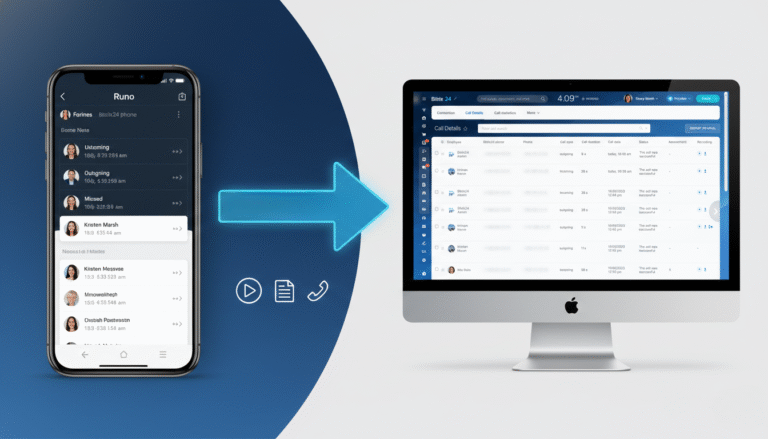
- Reduces manual data entry: Calls, emails, and meetings are logged automatically.
- Gives instant visibility: You can see exactly where every dollar is in your pipeline without asking your team for status updates.
Key AI CRM Capabilities That Matter
When evaluating these systems, don’t get distracted by technical jargon. Here are the core capabilities that actually move the needle:
- Smart Lead Prioritization: Automatically scores leads so your sales team knows exactly who to contact first thing in the morning.
- Automated Workflows: Sets up rules where “If X happens, do Y” (e.g., If a deal is marked “Won,” automatically send a welcome onboarding packet).
- Omnichannel Conversation Tracking: Keeps WhatsApp, email, and social media messages in one single timeline per customer.
- Sales Activity Suggestions: Prompts reps on the best time to send an email or make a call based on past engagement.
- Performance Insights: Shows you which sales channels are actually making money, not just driving clicks.
Real Startup Use Cases
How does this look in the wild? Here is how different startup teams are using AI CRM right now:
- The Early-Stage Startup: A two-person founding team uses auto-responders to instantly reply to inbound website leads, ensuring prospects feel heard even when the founders are sleeping.
- The Small Sales Team: A team of three reps uses automated follow-up sequences. They now handle the volume of a six-person team because they never have to write “just checking in” emails from scratch.
- The Founder Ditching Spreadsheets: A CEO moves from a chaotic Excel tracker to a visual pipeline, finally getting a real-time view of cash flow without spending Sunday nights updating cells.
- Customer Support: A support rep sees a customer’s entire purchase history and previous complaints the second they open a chat, allowing them to solve the problem in minutes instead of asking, “Can I get your order number?”
How AI CRM Helps Startups Scale Without Hiring More
This is the ultimate promise of an AI CRM: Growth becomes process-driven, not people-dependent.
When automation replaces repetitive work, one person can handle significantly more leads without burning out. Faster, automated responses dramatically improve your conversion rates—because in startup sales, speed wins.
By building your processes into a smart system, you reduce your dependency on individual rockstars. If a sales rep leaves, their knowledge, templates, and lead histories don’t walk out the door with them; they stay securely in your CRM.
What to Look for in an AI CRM
If you are ready to upgrade, keep these practical criteria in mind:
- Easy to Use: It shouldn’t require a computer science degree. Look for an intuitive interface with a low learning curve.
- Strong Automation: Ensure it has drag-and-drop workflow builders to easily automate your specific business rules.
- Multi-Channel Tracking: It must integrate with the communication tools your customers actually use (WhatsApp, email, social).
- Scalability: It should be cheap enough for a team of 3, but robust enough to handle a team of 50 as you grow.
- Seamless Integrations: It needs to talk to your existing tools, like your accounting software or marketing platforms.
Choosing a Scalable AI CRM Solution
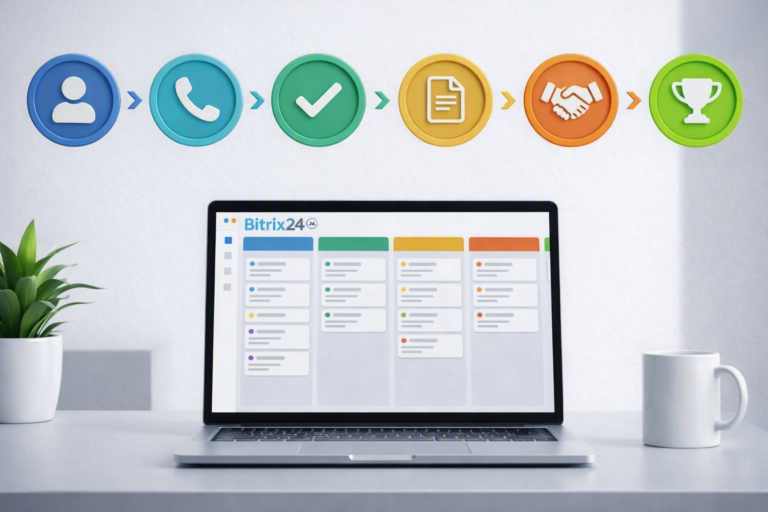
For growing teams looking to check all these boxes, Bitrix24 is a powerful all-in-one platform. It goes beyond basic contact management by combining CRM, team communication, and deep workflow automation into a single workspace.
Instead of paying for a CRM, a separate chat app, and a standalone project management tool, Bitrix24 centralizes your operations. It’s built specifically to help startups manage leads, automate repetitive tasks, and scale without friction.
Common Mistakes Startups Make with CRM
Even with the best tools, implementation is where startups stumble. Avoid these traps:
- Choosing tools that are too basic: Starting with a glorified address book means you’ll just have to migrate to a real CRM six months later.
- Not setting up workflows: Buying an AI CRM and doing everything manually is like buying a sports car and never taking it out of first gear.
- Treating CRM as just a database: If you only use it to store names, you are missing out on 90% of its value. Use it to drive action.
- Not training the team: If your team doesn’t understand how the tool makes their life easier, they simply won’t use it.
Final Thoughts
Startups rarely fail because they don’t have enough leads; they fail due to poor management, slow response times, and disorganized pipelines.
An AI CRM brings structure, speed, and massive scalability to your operations. The right system allows your small team to punch far above their weight class, driving revenue efficiently without artificially inflating your payroll.
At SarasUK, we specialize in helping businesses implement, customize, and optimize powerful tools like Bitrix24. We ensure your CRM is built to match your unique sales process, so you can stop wrestling with software and get back to scaling your startup.